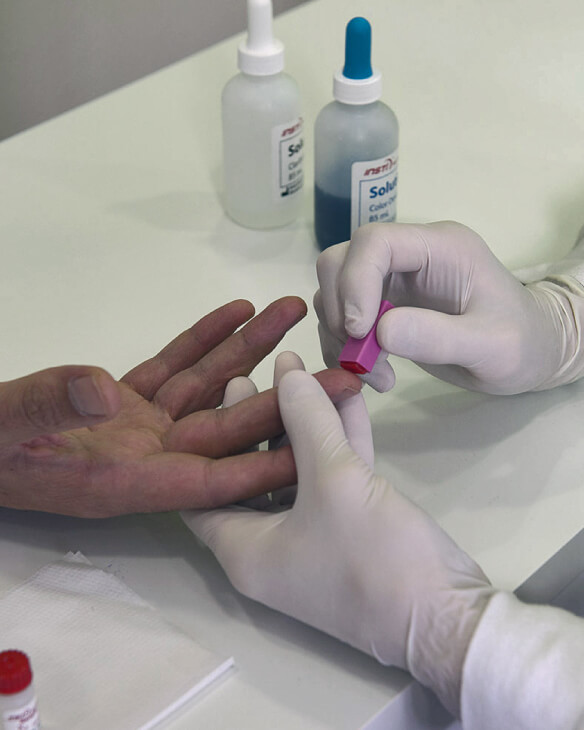
Pilot study on the use of HCV core antigen (HCVcAg) and alternative sample collection methods for the diagnosis of chronic hepatitis C and the promotion of hepatitis B and D diagnosis in a correctional facility in Greece
- Project Duration NOV 2025
- Location Korydallos I Correctional Facility
Hepatitis C remains one of the most common infections in correctional settings, with rates several times higher than those in the general population. Through the pilot use of HCV core antigen (HCVcAg) and innovative sample collection methods, the project sought to demonstrate that diagnosis can be made more quickly, more easily and with greater accuracy, even in resource-limited settings.
Activities
The project’s activities included:
- Informing and educating the prison population about viral hepatitis.
- Applying and evaluating new diagnostic methods for hepatitis C.
- Promoting the diagnosis of hepatitis B and D.
- Linking those who tested positive to the National Health System for medical care and treatment.
This study contributed to:
- The early diagnosis and management of serious liver diseases.
- The protection of public health by limiting transmission.
- Strengthening trust between prisoners and healthcare services.
The project was a continuation of Promitheas’ longstanding work in correctional facilities, with the aim of ensuring equal access to healthcare for everyone, regardless of their status. Through research, collaboration and innovation, the organisation continued to “bridge the gap” between the most vulnerable populations and the right to health.
Results
- 312 prisoners received information and came forward for the programme.
- 305 successful blood draws for hepatitis C testing were performed.
- The success rate of blood draws reached 97.8%, confirming the high level of acceptance and the effective organisation of the intervention.
Laboratory Findings
- anti-HCV(+): 81 people (26.6%)
- HCV-RNA(+): 51 people (16.7% of the total)
- Active infection among anti-HCV(+) individuals: 63% (51/81)
- HBsAg(+): 4 people (1.3%), all of whom were HBV-DNA(+)
- HDV-DNA(+) was also detected in 1 of the 4 people (25%), confirming HBV/HDV coinfection.
The study was conducted with the kind sponsorship and support of Roche Diagnostics International Ltd and Roche Diagnostics Hellas (RDH), in collaboration with Affidea Kallithea, which provided molecular analysis for hepatitis C using advanced diagnostic tools (Real Time PCR and detection of the hepatitis C antigen).

Access4All in Greek Prisons ΙΙΙ
More
Point-of-Care for Prisons (PoC4Prisons)
More
MyPBCVoice
More